The Akal Takht Sahib, the highest temporal authority of the Guru Khalsa Panth, was originally managed by a Jatha of Akalis—Khalsa Saint-Soldiers who upheld Khalsa traditions and did not submit to any worldly authority, including the Sikh state. This system was dismantled by the British after their annexation of Punjab in 1849. The British introduced the practice of appointing a single individual as the “Sarbarah” (administrator) of the Akal Takht. This centralized system was later institutionalized through the Sikh Gurdwara Act of 1925, which formalized the Shiromani Gurdwara Parbandhak Committee (SGPC) as a statutory body.
In present times, the SGPC is controlled by the Shiromani Akali Dal (SAD) faction led by the Badal family, with Sukhbir Singh Badal at the helm. The Badal family’s political influence has significantly impacted the appointment and functioning of the Jathedars of the Akal Takht, often to the detriment of Sikh interests, Khalsa traditions, and the dignity of both the institution and its Jathedars.
Amid growing concerns over this issue, there has been an increasing call for the revival of Khalsa traditions and the establishment of a transparent, community-driven mechanism for appointing and defining the terms of service for Jathedars.
To explore this subject in depth, Sikh Siyasat has launched a series of interviews with leading Sikh personalities, representatives of Sikh organisations and Sikh intellectuals to understand their perspectives on the root causes of these challenges and their vision for a solution.
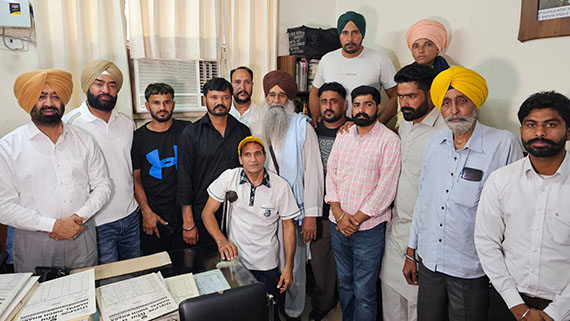
This is the 10th interview under this series. Journalist Mandeep Singh talks with Harinder Singh of Free Akal Takht movement.
These interviews are conducted by journalist Mandeep Singh under the guidance of Sikh Siyasat’s chief editor, Parmjeet Singh Gazi, with camera work and video editing handled by Jasbir Singh, Gurdial Singh and Amandeep Singh.
Podcast: Play in new window | Download