
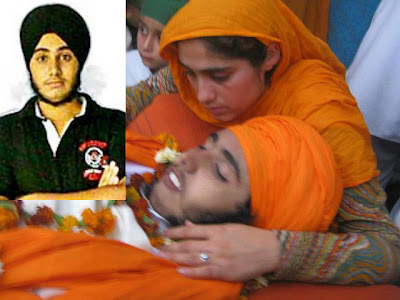
The cold-blooded murder of Jaspal Singh
On an earlier occasion, I had written to more than two newspapers of the region protesting against the distortion that has almost become second nature of the Indian Media when it carries news and views pertaining to the Sikhs and the Sikh issues. I am compelled to write again as under to The Tribune, although I am certain that like the two other letters written earlier, this one will also be ignored. The purpose of writing is to hold a mirror to the faces of our great leaders who fondly believe that they are firmly tackling the Sikh problems. If they are not able to speak about the deep-rooted prejudices that lead the state to frequent killing of the Sikhs in cold blood, they ought to evaluate the worth of service that they are rendering. The people must also become aware about their leaders who do not protest against blatant and potent distortions that eventually become the reason for glossing over the past murders and help in paving the way for committing fresh ones. The Sikhs must remind their leaders that the state repression and the Media support for it needs to be exposed if they are really concerned about the people they claim to lead. They must realize that leadership is not just pinching money from the pockets of the led to satisfy their own desire for luxurious living. It is not enough that they simply issue high pitched statements to convince themselves that they are alive and are going about their business seriously. Something concrete is required.
Bharat in Bhasmasur mode – by Sirdar Gurtej Singh (IAS)
Most of the writings on the events of the bloody decades have been done by journalists feigning ignorance of the political processes. They chose to have no perspective of history or of the spiritual aspirations of a people as independent as they were entitled to be under the prevalent basic law. The journalists substituted the lack of skills and perspective with an ample measure of newly acquired urban snobbery.
Bharat in Bhasmasur mode – by Sirdar Gurtej Singh (IAS)
Most of the writings on the events of the bloody decades have been done by journalists feigning ignorance of the political processes. They chose to have no perspective of history or of the spiritual aspirations of a people as independent as they were entitled to be under the prevalent basic law. The journalists substituted the lack of skills and perspective with an ample measure of newly acquired urban snobbery.
Indian Secularism and the Sikhs
Placed here is the main text of the presentation, a summary of which was read at the UN Human Rights Council, through the courtesy of the Interfaith International on June 12, 2008 at Geneva
Indian Secularism and the Sikhs
Placed here is the main text of the presentation, a summary of which was read at the UN Human Rights Council, through the courtesy of the Interfaith International on June 12, 2008 at Geneva