As the recent Israel-Iran conflict appears to have paused following the announcement of a ceasefire, a key question arises: who has truly lost in its aftermath? While many analysts suggest that Iran emerged in a stronger position, the objective here is not to take sides, but to offer a balanced analysis that encourages thoughtful and constructive dialogue within the wider community.
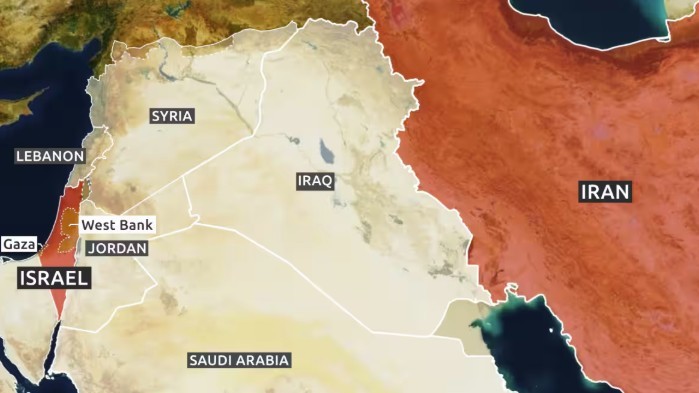
The Israel-Iran Conflict: A War Across Multiple Fronts
This recent Israel-Iran Conflict, fought across several domains — drones, missiles, cyber warfare, and proxies — now appears to have paused with a ceasefire. But the core question remains:
Who actually won? Who lost? And what does this conflict truly reveal?
Israel: Technological Strength, Strategic Vulnerability
Israel demonstrated formidable capabilities in signal intelligence, drone warfare, and air dominance. It successfully struck several high-value Iranian targets, including top commanders and infrastructure. Yet, these tactical successes came with some serious strategic drawbacks:
Defense Breached Despite Technology:
Despite having one of the world’s most advanced defense systems — Iron Dome, David’s Sling, and F-35 patrols — Iranian missiles reached deep into Israeli cities like Tel Aviv and Haifa. The world witnessed this for the first time.
Reliance on the U.S.:
Israel’s air defense only succeeded partially thanks to U.S. military support. American fighter jets were deployed in Iraq, Jordan, and the Red Sea. This underscores Israel’s ongoing dependence on Washington for its core defense.
Economic Zones Targeted:
Iran deliberately targeted Israel’s economic infrastructure. Some American analysts believe that if the damage continues at this rate, rebuilding cities like Tel Aviv and Haifa may become a long and painful process. They also suggest this prompted Israel to demand more direct U.S. intervention.
Moral Standing Damaged:
Israel launched its attack while nuclear negotiations between Iran and the U.S. were still underway. This move drew international criticism and raised ethical questions about Israel’s actions.
Conclusion: Tactical success, but a strategic setback.
Iran: Strategic Resilience, Internal Challenges
Despite limited resources, Iran proved itself a resilient regional power. It suffered heavy losses — top scientists, IRGC generals, and key infrastructure — but managed to maintain composure and retaliate.
Demonstrated Deterrence:
Iran showed that it could retaliate meaningfully through missile strikes, proxy forces, and cyberattacks. It possesses a vast missile arsenal, though its air defense remains weak. Its western and central corridors are highly vulnerable. Israel couldn’t penetrate Iranian airspace directly, but still carried out strikes from Iraq, Syria, and Azerbaijan — a tactic reminiscent of recent India-Pakistan confrontations.
Air Defense Weakness:
Had Iran possessed advanced systems like the Russian S-400, the extent of damage from Israeli airstrikes would likely have been significantly reduced.
Proxies Held Strong:
Iran’s allied forces — Hezbollah, Houthis, and Iraq’s PMF — remained operational and, in some cases, even strengthened.
Domestic Unity:
Despite longstanding internal divisions, Iranian society appeared more united during this conflict — something even Western analysts acknowledged. If this internal cohesion holds, it could mark a turning point for Iran.
Sympathy from Global South:
Because the Israeli attack happened during peace talks, many nations, especially in the Global South, began to see Iran as a victim rather than an aggressor.
Conclusion: Heavy damage, but survival. Iran proved its ability to bounce back.
The Global Picture: A New Strategic Reality
U.S. Exposure:
Although the U.S. prevented escalation, this conflict exposed cracks in its deterrence strategy in the Middle East. It hinted that America may no longer be capable of managing multiple war theatres simultaneously — a significant shift from past decades.
China & Russia’s Win in Narrative Warfare:
These powers didn’t fight on the ground but shaped the global narrative. They successfully highlighted Western double standards.
Gulf States’ Neutrality:
Countries like Saudi Arabia and the UAE maintained a neutral stance, signaling a shift toward a post-American regional order in the Middle East.
No Clear Winner, But Lessons for All
This ceasefire didn’t end the war — it simply paused it. But it leaves behind valuable strategic lessons:
- Israel remains a technological powerhouse — but it is not invincible.
- Iran remains cornered — but not powerless.
- The Global North still has dominance — but is no longer all-powerful everywhere.
- This wasn’t just a war of missiles. It was a war of narratives, perception, and endurance. And the real outcome will be determined not by what just happened — but by what happens next.
With inputs from “Ath-Khoonja” Telegram Channel.
⊕ Watch VIDEO – In Today’s Era of Global Wars, What Should Sikhs Do? | Exclusive Speech by Bhai Mandhir Singh